


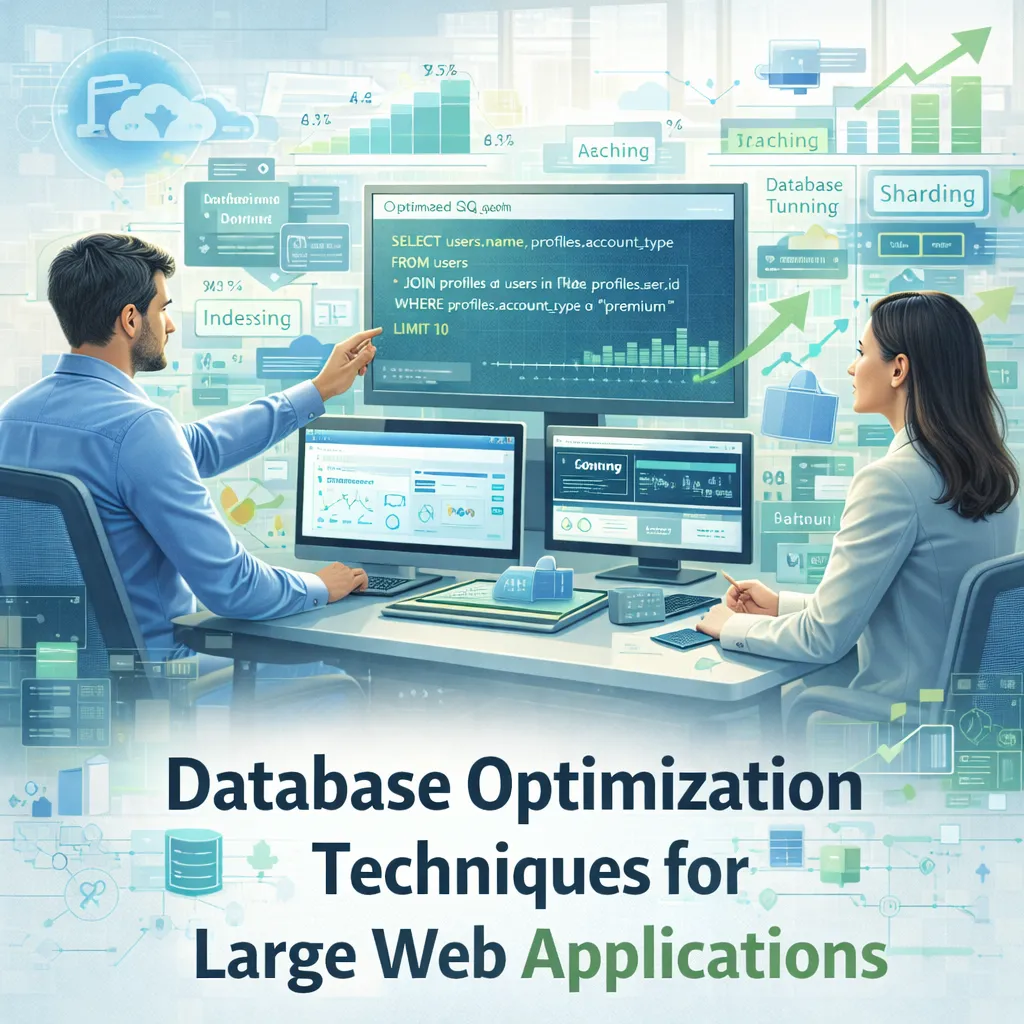
Database Optimization Techniques for Large Web Applications
As web applications grow, the database almost always becomes the primary bottleneck. Features that worked perfectly with a few thousand records begin to slow down with millions of rows. Pages that once loaded instantly start timing out. Background jobs pile up. Scaling the server alone does not fix the problem because the issue is not hardware—it is how data is stored, queried, and accessed.
This is why understanding Database Optimization Techniques for Large Web Applications is critical for developers, architects, and businesses that expect growth. Database optimization is not about one magic index or a single configuration tweak. It is a disciplined, ongoing process that touches schema design, queries, caching, infrastructure, and application architecture.
In this guide, you will learn practical techniques used in production systems to keep databases fast, reliable, and scalable as traffic and data volume increase.
Why Databases Become Bottlenecks at Scale
Databases are designed to handle large datasets, but inefficient usage can overwhelm even powerful systems.
Common causes of poor database performance
- Missing or incorrect indexes
- N+1 query problems
- Large table scans
- Overly complex joins
- Unbounded queries returning too much data
- Poor schema design
As data grows, these issues compound. What feels like a minor inefficiency early on can become a major outage later.
Start With Measurement, Not Guesswork
Database optimization should always begin with measurement.
Key metrics to monitor
- Slow query logs
- Query execution time
- Query frequency
- CPU and memory usage
- Lock contention
- Connection count
Optimizing without data often leads to wasted effort and missed bottlenecks.
Schema Design for Large-Scale Applications
A well-designed schema is the foundation of performance.
Use appropriate data types
- Avoid oversized types (for example, BIGINT when INT is enough)
- Use proper string lengths
- Prefer numeric types over strings where possible
Smaller data types reduce disk usage, memory usage, and index size.
Normalize where it makes sense
Normalization reduces duplication and improves consistency. However, excessive normalization can increase join complexity. Balance is key.
Strategic denormalization
For read-heavy systems, denormalization can improve performance by reducing joins. This should be done deliberately and documented clearly.
Indexing: Your Most Powerful Optimization Tool
Indexes dramatically improve read performance when used correctly.
Index columns used in filters and joins
- Foreign keys
- Status and type fields
- Timestamp fields used in sorting
Use composite indexes wisely
Composite indexes can speed up multi-column queries, but column order matters. Indexes should match your most common query patterns.
Avoid over-indexing
Indexes speed up reads but slow down writes. Too many indexes increase storage and maintenance costs.
Query Optimization Techniques
Even with good indexes, poorly written queries can destroy performance.
Fix the N+1 query problem
N+1 occurs when an application runs one query to fetch a list and then additional queries for each item. This is common in ORM-based applications.
- Use eager loading
- Batch queries
- Review query logs during development
Limit selected columns
Select only the columns you need. Fetching unused data increases memory usage and network overhead.
Avoid SELECT *
Explicit column selection improves clarity and performance, especially on wide tables.
Use pagination everywhere
Large result sets should always be paginated or streamed. Never return thousands of rows in a single request.
Database Caching Strategies
Caching reduces database load by avoiding repeated queries.
Query result caching
- Cache frequently used queries
- Use a fast in-memory store
- Define clear cache expiration rules
Application-level caching
Cache computed values, counts, and aggregates that are expensive to calculate repeatedly.
Cache invalidation
The hardest part of caching is invalidation. Use simple, predictable strategies instead of overly complex rules.
Partitioning Large Tables
When tables grow very large, partitioning can improve performance and manageability.
Benefits of partitioning
- Faster queries on recent data
- Improved maintenance operations
- Easier archival of old records
Common partitioning strategies
- Date-based partitions
- Range-based partitions
- Hash-based partitions
Partitioning should be planned early, as retrofitting it later can be complex.
Read Replicas and Load Distribution
As traffic increases, separating reads and writes becomes important.
How read replicas help
- Reduce load on the primary database
- Improve read scalability
- Increase fault tolerance
Applications must be designed to tolerate slight replication lag.
Connection Management and Pooling
Too many database connections can overwhelm even a powerful server.
Best practices
- Reuse connections where possible
- Limit maximum connections
- Close unused connections promptly
Proper connection handling improves stability under load.
Handling Writes at Scale
Write-heavy systems need special attention.
Batch writes
Batching inserts and updates reduces overhead and lock contention.
Asynchronous processing
Move non-critical writes to background jobs to keep user-facing requests fast.
Reduce locking
Keep transactions short and avoid unnecessary locks.
Archiving and Data Lifecycle Management
Not all data needs to live in the primary database forever.
Archival strategies
- Move old data to archive tables
- Store historical data in separate systems
- Delete data that is no longer needed
Smaller active datasets are faster to query and easier to maintain.
Infrastructure and Hardware Considerations
Database performance is influenced by infrastructure choices.
- Fast storage (SSD or NVMe)
- Adequate memory for caching
- Proper CPU allocation
- Network latency between services
Scaling hardware helps, but it should complement—not replace—query optimization.
Monitoring and Continuous Optimization
Database optimization is ongoing.
What to review regularly
- Slow query logs
- Index usage
- Table growth
- Error rates
Regular reviews prevent surprises and outages.
Common Database Optimization Mistakes
- Adding indexes without understanding queries
- Ignoring slow queries until outages occur
- Overusing joins unnecessarily
- Returning too much data
- Skipping monitoring
FAQ: Database Optimization for Large Applications
1) When should I start optimizing my database?
As soon as you see consistent growth in data or traffic. Early optimization prevents painful refactors.
2) Are indexes always good?
No. Indexes help reads but slow writes. Add them based on real query patterns.
3) Should I use caching or optimize queries first?
Optimize queries first. Caching inefficient queries hides problems rather than fixing them.
4) How do I know if partitioning is needed?
If tables grow very large and queries slow despite indexing, partitioning may help.
5) Do ORMs hurt database performance?
ORMS can be efficient when used correctly, but misuse often leads to N+1 queries and over-fetching.
6) Is scaling hardware enough?
Hardware helps, but poor queries will still cause problems. Optimization must come first.
Conclusion: Optimize Databases With Discipline
Database Optimization Techniques for Large Web Applications are about discipline and visibility. Measure first. Fix the biggest bottlenecks. Re-measure. Repeat.
By combining solid schema design, proper indexing, efficient queries, caching, and scalable infrastructure, large applications can handle growth smoothly without sacrificing reliability or speed.
For additional guidance on performance and scalability best practices, visit https://web.dev/.